
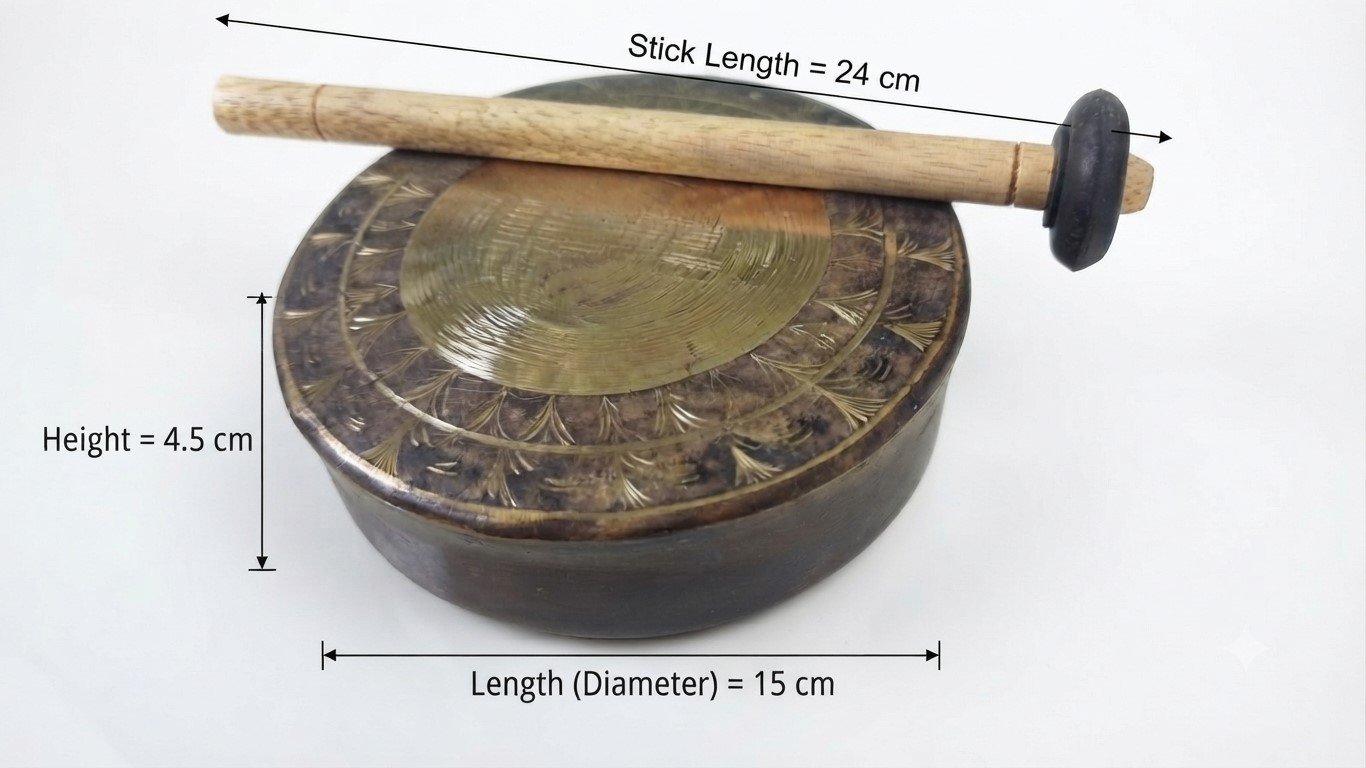
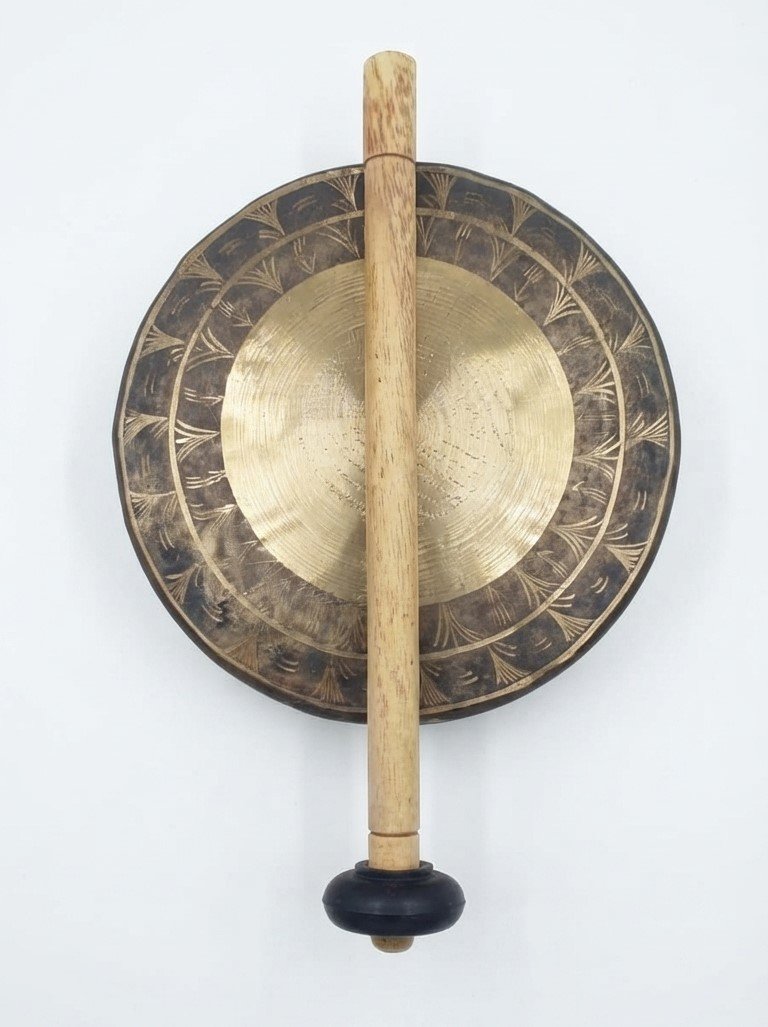
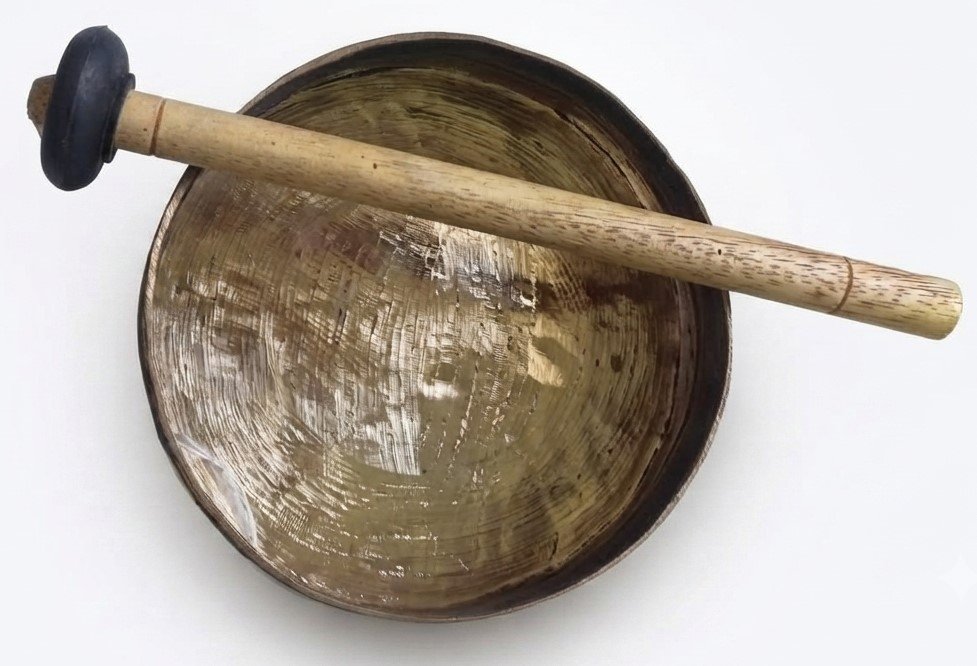
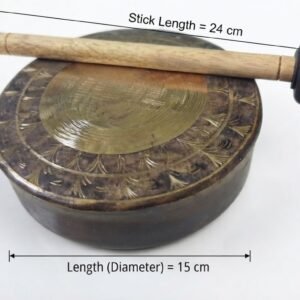
Authentic handcrafted Jangetta — a traditional bronze ritual instrument used in Madhva sampradaya temples during mangalarati. Comes complete with a wooden striker for that signature resonant ring.
Unlike a flat clap or bell, bronze idiophones like the Jangetta produce a layered, shimmering resonance (multiple overtone frequencies ringing together) — the same acoustic quality that gives temple bells and gongs their distinctive, unmistakable “sacred sound.”
| Attribute | Detail |
|---|---|
| Includes | Bronze (disc), Wood + rubber tip (striker) – 1 no each |
| Diameter | Jangetta: 15cm length * 4.5cm Height, Wooden Stick: 24cm |
| Weight | 525 grams & Wooden Stick: 50 grams |
| Includes | 1 Jangetta + 1 wooden striker |
| Origin | Karnataka, India |
| Use | Aarti / Mangalarati, temple & home pooja |
🔔 Benefits of the sound
- Helps create a meditative atmosphere
The long, resonant tone from bronze can provide a steady auditory focus. Listening to it may help you settle your attention during prayer or meditation. - May promote relaxation
Slowly decaying, harmonious sounds can be calming for some people. This is more about the overall acoustic experience than one particular frequency. - Useful as a ritual “attention cue”
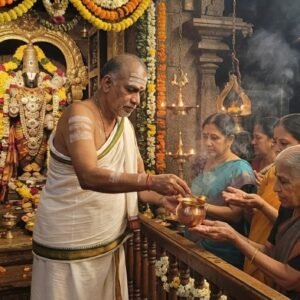
In Hindu worship, bells and metal instruments are traditionally used at the beginning of puja. The sound can signal the transition from ordinary activities to prayer and focused awareness. Used especially by Vaishnava devotees during Maha mangalarathi in South India. - Rich harmonics from bronze
The bronze produces multiple resonances and harmonics. That complex sound is actually part of what gives a bronze vessel/bell its characteristic ringing quality. - Spiritual significance
Traditionally, temple bells and bronze sounds are associated with purification, invoking divine attention, and creating a sacred atmosphere. These are matters of religious tradition rather than scientifically established effects.







Reviews
There are no reviews yet.